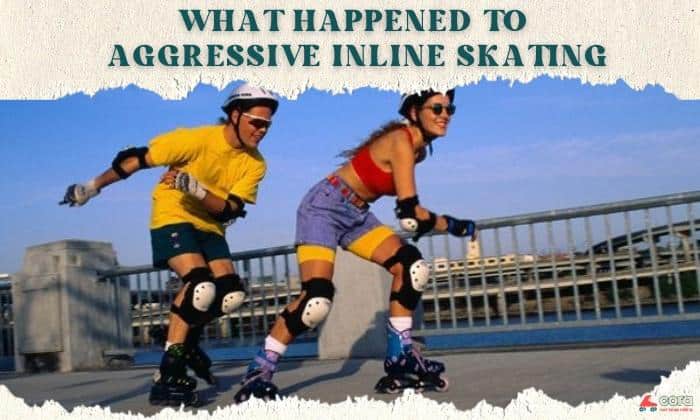
| The in-line skates are seen most
briskly among the generation too young to worry too much about broken bones and torn
ligaments - the 18 to 35 age group. These skates (in-line) are faster and offer greater
maneuverabilitv" says a Rollerblades spokeswman. "They also can go over bumps
more easily." Bumps? A Rollerblade promotional video showed skaters literally
skating down stairs, over curbs, off 8-foot ledges. Bay Area skater Greg Levien, 24, and
his buddy; Mike Riddle, 17, swear they went rock climbing in Glen Park Canyon wearing
their in-line skates. "It was great workout for our legs."
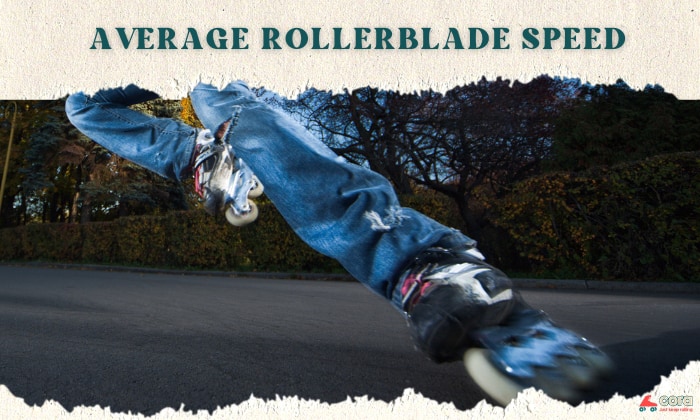
Skaters say they can reach speeds of 35 miles per hour. Ingrid Gabrian, 25, who has
skated down from Twin Peaks, as well as do Powell Street and Clipper Street, describes the
experience as "close to the edge of death."
The San Francisco traffic code allows roller skating on the street. No special speed
restrictions exist for roller skaters. "They have the same limits as cars," says
San Francisco police spokesman Jerry Senkir. "If they can go 35 miles an-hour, more
power to them. He added with a laugh, "especially on the freeway." .
Skating on the sidewalk in business districts is, however, prohibited.
Gabrian also skates under trucks (parked) and atop the Ocean Beach retaining wall.
"Something that wide (the wall) you should be able to skate on," she says.
"I like practice things and not be afraid of falling. Falling shouldn't be one of
your fears."
Falling may not be one Gabrian's fears, but the chance of it does give her mother a
start. "She (her mother) was driving through the park and she saw me," says the
skater. "What scared her was that was going faster than she was"
Gabrian's mother's not the only I person perturbed by the sight of maniacs on skates.
"They hate us I at.Pier 39," says David Miles, founding_member of the Golden
Gate Park Skate Patrol. "They want to call out the National Guard." In his
11-year skating career, Miles has missed only seven skating Sundays in the park. "I
couldn't imagine a world without skating," he says.
David Miles and a group of 11.others twice skated from Los Angeles to San Francisco, as
part of a city-sponsored campaign, Skate Against Crack and Violence. One trip took about
two days, with each skater completing about 150 miles.
When he's home, Miles and his skating friends go in for "afterhours" skating:
10 or 11 at night until the wee hours when the traffic's not bad. Some Tuesday nights they
might skate across town to the Financial District or to the Wharf. School playgrounds and
underground parking garages are favorites.
Recently, a small but dedicated pack of skaters tackled the now
closed-due-to-earthquake-hazard Embarcadero off-ramp. "It was great," says one
of the be-wheeled urban adventurers. "We got to see some of the (earthquake damage)
up close."
Visiting new and unusual places via skates is great sport,. say the skaters. Ingrid
Gabrian does her laundry, goes to movies and does her shopping (at Tom's Natural Food
Store) on skates.
"I dance in my kitchen wearing my skates," says another skater.
While skate dancing is still part of the scene, in-line skate manufacturers are
apparently trying to distance themselves from the disco/spandex skating fad of the late
'70s. "We want people to look at it as a whole new sport," says the Rollerblades
spokeswoman.
The American Heart Association has published a pamphlet, "Roller Skating for a
Healthy Heart," stating that 20 minutes of vigorous skating three times a week can go
a long way to build fitness. Some athletes from sports such as skiing, running, rowing,
and cycling are touting skating as a way to cross-train. According to Rollerblades,
members of the U.S. Ski Team, 7-Eleven Cycling Team, Reebok Cycling Team, the U.S.
Biathalon Ski Team, Cross-Country Canada and the Boston Bruins skate on Rollerblades
Skaters say their sport doesn't pound the joints the way, say, running does. Skating is
generally considered "low-impact," although a spill on the pavement can
certainly be considered "high impact." Typically, skaters wear heavy plastic
knee guards and wrist protectors. "I'd say it's a lot harder to fall with these
skates (in-line)," says' _ San Francisco skater Pat Mulrooney
Apparently, it's a lot harder to stop with the in-line skates. Many skaters don't like
the built-in brake on the back of the skate and prefer to learn "hockey skater's
stop," which involves turning and skating backward.
"The stop is the hardest part to learn," says the spokeswoman for the
Rollerblades company. "We encourage people to skate on flat surfaces at first - at
least, until they learn to stop."
At least.
Where to pay and roller skate
SKATER'S HEAVEN is Golden Gate Park, particularly when John F. Kennedy Drive is closed
to traffic on Sunday. The new bike path along the Great Highway is also recommended.
Beginning skaters might want to attend a free skater's clinic held from 11 a.m. to noon
Sunday at Sixth Avenue and JFK Drive. Sponsored by the Outdoor Roller Skating Association,
it's a chance,. says the organization's president, David Miles,
to "get a starting point and set a goal."
Rounding up a pair of skates isn't hard. The new in-line skates cost $90 to $250, but
beginning skaters probably would want to rent a pair at first:
Skates on Haight, 1818 Haight St. (752-8375). Rents both in-line
skates ($5 an hour and $20 all day) and conventional skates ($4 an hour and $16 all day).
Hours: 10 a.m. to 6 p.m. Saturday and Sunday; 11 a.m. to 6 p.m. Tuesday through Friday.
Closed Monday.
Magic Skates, Sixth Avenue and Fulton (668-1117). Rents only
conventional skates ($3 an hour and $9 all day). Also rents bikes. Hours: 10 a.m. to 5:30
p.m. daily.
Of course, the easiest way to enjoy skating might be to turn on the tube to Channel 5
at 12:30 a.m. Saturday for the excruciatingly tacky "RollerGames." Strictly for
the slumber party set, but if you're in the mood. |